Milkshakes for Marleigh, Kate Fisher | Book 69, June 2025
Milkshakes for Marleigh, Kate Fisher | Book 69, June 2025
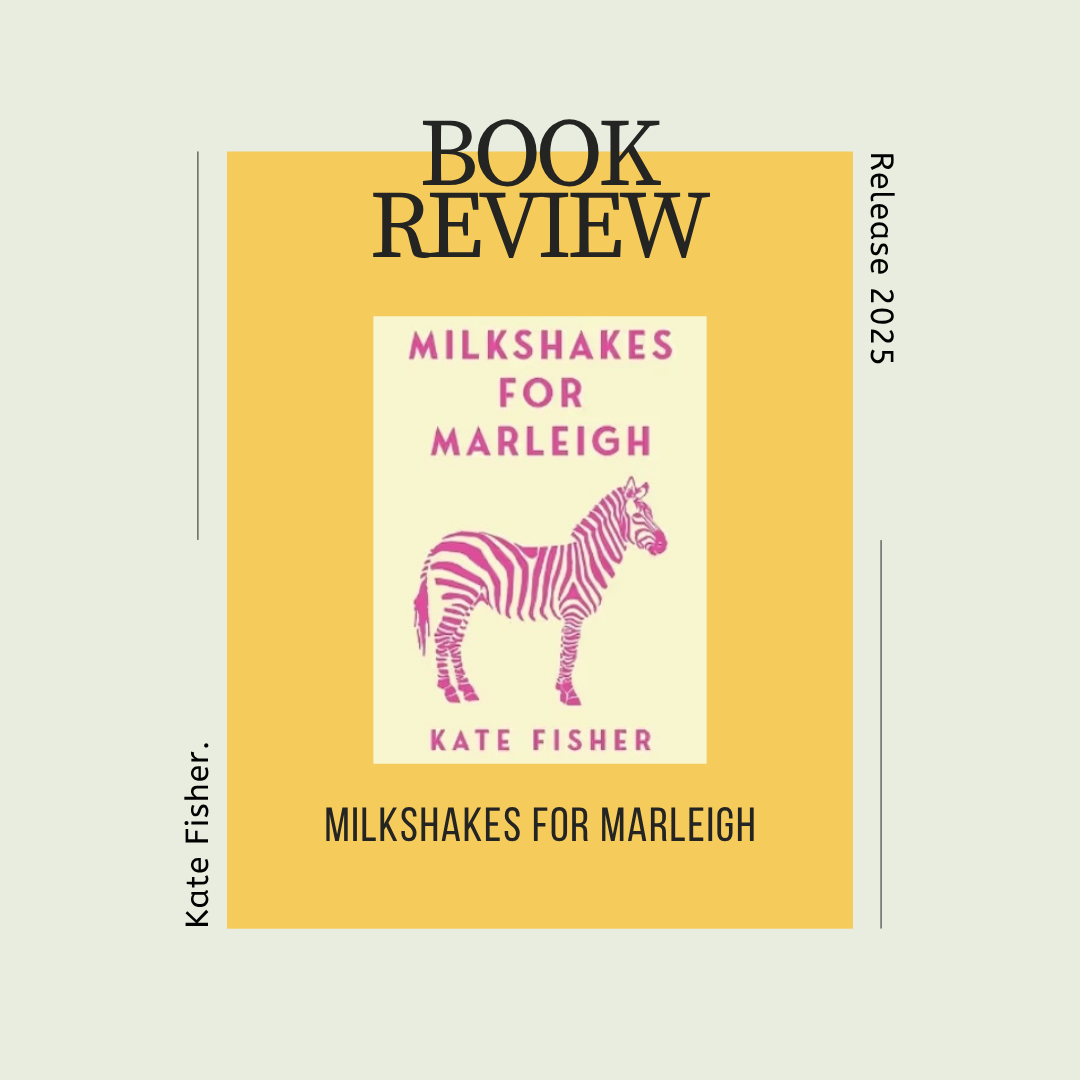
Mum (aka Zebra) and I went on a little weekday date to visit Kate at Dymocks Hay Street for the Milkshakes for Marleigh book signing. We’ve made a habit of turning adventures into something more—like the time, back in maybe 2023, we took a selfie with the life-sized zebra in the furniture shop window in what is now Beaufort Street Books. Coffee followed, as it always does.
Zebra—my preferred name for Mum on anything to do with the kids—is a retired aged care worker and Assistant in Nursing (AIN), most recently working in the ICU at Midland. So when I said, “Mum, we must go—it’s a pink zebra, blood donations, a bookstore, and coffee at Dome after”, she was on board immediately. (Side note: Dome Hay Street is closed.)
The last book signing I attended at Dymocks Hay Street was Julia Gillard’s. The line stretched up the street. I’m fairly sure the store was still family-run then.
Crazy coincidence—while Mum and I were meeting the lovely Kate today, my kids came home from school announcing, “I met an author today!” My son expressed his was “more for the eight-year-olds,” he reckoned, couldn’t remember the Authors name. Boys, hey.
Flashback to my 20s—no, not those clubbing pics from a few blogs ago. I’m talking BHP maintenance contract days circa 2010. I donated whole blood twice at the Wellington Street centre. I still remember getting a keychain stamped with “A+” and thinking I’d been awarded for giving a brilliant donation… Turns out that’s just my blood type—but still, it was a brilliant donation. My A+ blood can potentially donate the trifecta: red cells, plasma, and platelets.
Since then, I’ve been on the receiving end—after giving birth to my son, I needed a transfusion. Life, full circle. These days, time, two kids, and ongoing low iron have been blockers to donating again. My GP and I are sorting hormones and iron levels now. I tried to join the Milkshakes for Marleigh team, but the system still had my ancient BHP email and a phone number from forever ago. That’s a call I need to make this week. It’s after 4pm as I write this, so dinner and the nightly chaos are calling.
On the train back to my car today, I followed curiosity and completed the online eligibility test. Based on my answers, I’m currently eligible to donate plasma and blood, with more screening required at the centre on the day. A good starting point.
So, why now?
Well, first of all—read the book. You’ll want to donate too.
When I donated 15 years ago, there wasn’t much transparency about where it went. Now? The information is abundant and empowering. In case you’re wondering:
• 1 in 3 Aussies will need blood in their lifetime.
• 1 in 30 eligible Australians donate.
• Donated blood lasts just 42 days.
• 10,000 donations are needed every day in Australia.
• Every 24 seconds, someone in Australia needs blood.
• One donation can save up to three lives.
• Only 7% of Aussies have O-negative, the universal type.
• Blood is separated into:
• Red Cells: carry oxygen (stored refrigerated)
• Plasma: used for clotting disorders (frozen)
• Platelets: help with clotting (stored at room temp)
• All donations are screened for HIV, hepatitis, and other infections to ensure safety.
You’re welcome.
Meeting Kate was beautiful. She’s warm, grounded, and so open about the journey she and Marleigh have been on. She shared the story behind the zebra (which I’d read and forgotten), and told us about attending the Heart of Women Awards, where she was named Woman of the Year. She and Marleigh wore white dresses, but apparently, picking the right one for Marleigh took a bit—scratchy fabric. I get it. My daughter would be the same.
Check out the Milkshakes for Marleigh Instagram for photos from the night. It’s all there.
Kate signed our books and had a lovely chat with us. And she even wrote “Dear Zebra” in Mum’s copy. Oh My heart.
As for the book—I’ve postponed my library return to read it first. After this mid-morning mission, how could I not?
Wednesday 11th June, I’ve called Lifeblood and sorted out my account. The woman on the phone was great as I was concerned about the iron levels with my donation she shared plasma is best donation it is 90 mins, as the process separates the blood to collect the plasma (yellow colour) then the cells that make the blood red are then returned during the sitting.
Plasma is used in 18 treatments including chicken pox, brain disorders, immune deficiency, tetanus, measles, liver disease, bone marrow transplants, heart surgery, haemorrhages, rare blood disorders, kidney disease and severe burn to name a few…
I joined the Milkshakes for Marleigh lifeblood team, at the time of joining (11.6.25), the team have donated 254 times in 2025, with 762 lives saved this year! We are only in June! I’m booked in toward the end of June.
I went down the rabbit hole on the Lifeblood website looking at their research page and saw that The University of Western Australia was involved in research training during 2019-2020 with Roberta Edgeworth becoming a Doctor of medicine, project “Serum Eye Drop Manufacture usage in Australia.” Not something you’d expect to see on a blood donation website.
If you have time check out the timeline of the Australian RedCross History. I geeked out on it!
Links
Home - Milkshakes for Marleigh
https://www.lifeblood.com.au/donors/other-ways-to-help/lifeblood-teams
Back to the book…
I didn’t expect to cry before page five. But here we are. I picked up Milkshakes for Marleigh thinking it would be informative—maybe even inspiring—and it is. But it’s also utterly gut-wrenching. Beautiful. Devastating. Necessary.
The book is grounded in a reality many of us never need to consider: what happens when a child’s immune system simply can’t cope with something as widespread as Covid-19. For Kate Fisher, that reality is lived daily. Her daughter Marleigh, now seven, will depend on blood donors for the rest of her life due to autoimmune encephalitis. If a ventilator were needed during a crisis and someone else required it too, it’s possible Marleigh wouldn’t be the one to receive it. That’s not dramatic writing—that’s the brutal, under-resourced truth.
And yet, from the very first pages, Kate’s strength radiates. You feel her urgency, her fight, and her fierce love for her daughter. The story of Marleigh’s emergency helicopter transfer during the bushfires, only three years old and needing to get to Sydney for treatment, reads like a scene from a movie. Except this isn’t fiction. This is a mother making impossible decisions in impossible circumstances—and somehow doing so with grace.
Milkshakes for Marleigh started as a podcast, and if you’ve listened to even a single episode, you know Kate’s storytelling carries weight. Now, in book form, these stories reach new depth. They aren’t just about blood. They’re about time. The time blood donations have bought families to make memories, to recover, to fall in love, to live.
Kate writes, “Australian blood donors don’t just save lives, they keep families together.” That line hit me hard.
One chapter that stood out for me was Chapter 7—Joel Mason’s story. A surfer bitten by a shark in Nambucca, Joel’s life was saved by blood donors. The situation was so dire that paramedics were told, “If you haven’t got any blood in that helicopter, don’t bother coming.” That sentence alone is enough to make you stop and think about just how critical—and limited—our blood supply is.
As a lover of the ocean, that story connected deeply with me. But so did every other one. Each chapter gives faces to the statistics: one in three Australians will need blood in their lifetime, but only one in thirty donate. The math doesn’t add up. It’s not enough.
If you’ve ever donated blood, you may be part of one of these extraordinary tales of survival—stories that live quietly in the veins of someone else’s tomorrow. And if you haven’t yet, this book might just be the nudge you need.
It made me cry. It made me proud. It made me book a donation appointment.
Because somewhere, a mother like Kate is doing everything she can with the resources she has—and the rest is up to us.
Recommended for:
People who love real stories, those working in healthcare, parents, podcast lovers, and anyone who’s ever wondered if donating blood actually makes a difference. (Spoiler: it absolutely does.)


Comments
Post a Comment